Showing posts with label libraries. Show all posts

Thursday, January 14, 2016

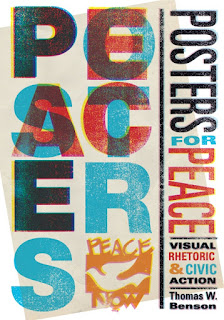
Choice names Posters for Peace among Editors' Top Community College Resources

Choice has named Posters for Peace as among "Editors' Top 75 Community College Resources" for November 2015.

http://www.amazon.com/Posters-Peace-Visual-Rhetoric-Action/dp/0271065877/ref=sr_1_1?s=books&ie=UTF8&qid=1452790930&sr=1-1&keywords=benson+posters+for+peace
"Within the wider academic community, the number of two-year colleges is growing nationwide, and Choice is poised to help the libraries on these campuses, where much of the work revolves around three main challenges: how to help students learn; how to improve academic and program performance; and how to promote innovation."

Saturday, December 4, 2010

The Library: Three Jeremiads by Robert Darnton | The New York Review of Books

Would a Digital Public Library of America solve all the other problems—the inflation of journal prices, the economics of scholarly publishing, the unbalanced budgets of libraries, and the barriers to the careers of young scholars? No. Instead, it would open the way to a general transformation of the landscape in what we now call the information society. Rather than better business plans (not that they don’t matter), we need a new ecology, one based on the public good instead of private gain. This may not be a satisfactory conclusion. It’s not an answer to the problem of sustainability. It’s an appeal to change the system.

The Library: Three Jeremiads by Robert Darnton | The New York Review of Books

Monday, May 4, 2009

Scholarly Communication in the Digital Age -- Texas A&M Conference

This conference is now long over, but records and references are still available; follow the links.

The Changing Landscape of Scholarly Communication In the Digital Age
Wednesday, February 11-13, 2009
Annenberg Presidential Conference Center Texas A&M University

NOTE: Streaming videos of the symposium are now available.

Click here to view.

There is no charge for participation in the symposium, but early registration is strongly advised.
This three-day symposium will cover the following major topics:

  • open access
  • intellectual property rights
  • peer-reviewed electronic journal and book publishing
  • improving access to publicly funded research and the scholarly work of faculty
  • the effects of new scholarly publishing models on the promotion and tenure process
  • how university presses can best contribute and sustain themselves in this changing landscape
  • the best uses of university resources to cover these mission-centered responsibilities and costs
  • the role of the university libraries as institutional repositories and facilitators for faculty scholarship

Letter of invitation from Dr. Jeffrey S. Vitter, Provost and Executive Vice President for Academics, Texas A&M University

Selected Background Readings

Thursday, April 30, 2009

Privacy and Confidentiality in the University Libraries

In January our Penn State Faculty Senate received an informational report on "Privacy and Confidentiality in the University Libraries." It may be of general interest to readers of this blog. The report's introduction says, in part:
This report is presented as the result of a collaborative dialogue among the faculty, students, and Libraries’ professionals meeting as the Penn State Faculty Senate Committee on Libraries. Prompted by recent changes in national security laws and rapid developments in technology, we asked: What are the current policies and procedures protecting the privacy of library users? How, if at all, do new national security policies and technological developments present new problems for the protection of privacy, and how are the Libraries addressing these problems? How do the Libraries resolve cases in which privacy interests may be in potential conflict with each other, or with other interests? The current report is a first assessment of the policies of the Libraries, the regulatory and policy environment in which the Libraries operate, a glimpse of the new challenges the Libraries are dealing with in privacy protection, and a description of the training offered to all Libraries’ staff in how to protect the privacy of library users.

Penn State University, Faculty Senate, Committee on Libraries, informational report, "Privacy and Confidentiality in the University Libraries," January 2009.
Sunday, April 5, 2009

Debating Google Books

The Google Books project is digitizing books -- whole libraries full of books. The books will be indexed and searchable online, and will be available in full text, for a price. The library at my own institution, Penn State University, is participating with Google in scanning the full contents of the libraries of the Big Ten -- some of the largest scholarly libraries on the planet.

There's a useful roundup of the debate on the Google Books project by Miguel Helft in the New York Times this morning.

Miguel Helft, "It's Not Just Microsoft That's Balking at Google's Book Plans," New York Times, 4 April 2009.

Wednesday, March 18, 2009

Scanned Any Good Books Lately?

Stanley Katz will lecture at Penn State tomorrow on the Google book scanning project:

The public is invited to join Dr. Stan Katz for his presentation, "Why there's no free lunch in cyberpublishing: Take two," on Thursday, March 19, 2–3 p.m., in Foster Auditorium, 101 Pattee Library, Penn State University Park campus.

According to a recent issue of Princeton Weekly, in the late 1980s, Katz went to Congress with a modest proposal: Why not allocate a billion dollars to digitize the contents of the nation's academic libraries? People thought he was crazy. They couldn't imagine why you'd want to do all that digitizing. Even Katz couldn't have projected the revolutions soon to come. Congress chose not to act—but today Google has undertaken the project in collaboration with over two- dozen libraries around the world, including the Penn State University Libraries.

In his presentation, Katz will discuss the proposed Google book settlement and its potential impact on readers, libraries and publishers. The Google book project originally promised to break a legal logjam: partnering with research libraries around the world, Google's effort to digitize their collections challenged strict interpretations of copyright law, especially the Digital Millennium Copyright Act of 1998. The settlement, which proposes to conclude two major class action lawsuits arising from the Google Book Project, will establish new rules governing access to out of print books, new mechanisms for clearing fees and copyrights for those who need digital access to older materials.

A new world is emerging, and it is a world in which decisions made in private commercial negotiation will set the rules for access to large segments of copyrighted materials. Katz asks, "Will this be a world the university community will be happy to live in?"

Katz is lecturer with the rank of professor in the Woodrow Wilson School of Princeton University and president emeritus of the American Council of Learned Societies, the leading organization in humanistic scholarship and education in the United States. His recent research focuses upon the relationship of civil society and constitutionalism to democracy, and upon the relationship of the United States to the international human rights regime.

The Shifting Ground Series is sponsored by the University Libraries Colloquia Committee and is free and open to the public. This presentation will be broadcast via Media Site Live at: http://live.libraries.psu.edu/mediasite/Catalog/. This is an open presentation so no log in is needed.

For more information, call Martha Ney (814-863-5447) or e-mail mdn1@psu.edu