Democratic deliberation - we pause for this message
Saturday, September 4, 2010


Friday, September 3, 2010
Level the Playing Field?
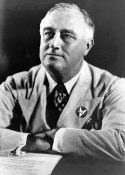
Robert Reich in the New York Times today -- "How to End the Great Recession":
Reich argues that we cannot recover from the long structural recession until the middle class is able to buy the goods in produces.
THE Great Depression and its aftermath demonstrate that there is only one way back to full recovery: through more widely shared prosperity. In the 1930s, the American economy was completely restructured. New Deal measures — Social Security, a 40-hour work week with time-and-a-half overtime, unemployment insurance, the right to form unions and bargain collectively, the minimum wage — leveled the playing field.
Reich argues that we cannot recover from the long structural recession until the middle class is able to buy the goods in produces.
Thursday, September 2, 2010
The Two-Body Problem
The AAUP has released a new report on recommended practices for academics seeking jobs for themselves and spouses/partners.
Do you have a “two-body” problem? Are you and your partner or spouse searching for academic positions in the same area, or even at the same institution? Or are you an administrator or department chair seeking guidance on sound policies and procedures for appointing an academic couple? Would you like to know what kinds of dual-career accommodation programs might be available to assist you, or what procedures an institution should follow to best accommodate your partner? If so, the AAUP’s newly released “Recommendations on Partner Accommodation and Dual Career Appointments” is a must read.
The new recommendations were formulated by the AAUP’s Committee on Women in the Academic Profession in view of the increasing likelihood that faculty, especially women faculty, will have domestic partners or spouses who are also academics. The recommendations provide critical guidance on developing sound, equitable policies. In addition, they provide a comprehensive review of the types of partner accommodation programs already available to dual-career academic couples at many colleges and universities.
The recommendations recognize the diversity of academic institutions and their needs, rather than endorse a particular partner accommodation program or policy as appropriate for all institutions. Research universities, for example, may have a particular interest in accommodating partners to remedy the consistent underrepresentation of women among their tenure-track and tenured faculty. Smaller institutions or those with collective bargaining agreements, because they may have more difficulty accommodating dual career couples, may be less inclined to do so. Whatever their needs, colleges and universities can benefit from well-developed policies that, according to the recommendations, “meet the strictest tests for transparency and good governance practices.”
Included among the recommendations:
- Accommodation policies should be developed by appropriate faculty bodies.
- The policies should take into account local conditions and institutional particularities, departmental hiring priorities, and programmatic and budgetary needs.
- Any faculty appointments made as a result of their implementation should be driven by considerations of merit, and, whenever possible, appointments should be made to tenure-track positions.
- Dual career appointments should not be the occasion for increasing the number of contingent faculty members at an institution.
Balancing the needs of departments and institutions with the needs of faculty members is of paramount importance to successful partner accommodation appointments.
We hope these recommendations will prove a useful tool to faculty and administrators seeking to harmonize sensitivity to the needs of academic couples with due attention to good governance and the protections of tenure long recommended by the AAUP.
Ann Higginbotham, Chair
Ann E. Green, Chair
Committee on Women in the Academic Profession
Tuesday, August 31, 2010
Public Forgetting

Bradford Vivian, Public Forgetting: The Rhetoric and Politics of Beginning Again (University Park: Penn State University Press, 2010).
from the press:
“In his sustained meditation on forgetting, Bradford Vivian makes a singular and extremely valuable contribution to the field of memory studies. He substantially advances the theoretical discussion of memory and forgetting with his extended critiques (rhetorical analyses, really) of both ancient and recent formulations of collective public memory and forgetting. The conclusion is almost poetic in its lightness of touch. It pulls all the strands of the book into a single compelling case for forgetting as part of memory.” —James E. Young, University of Massachusetts Amherst, author of The Texture of Memory and At Memory's Edge.
Forgetting is usually juxtaposed with memory as its opposite in a negative way: it is seen as the loss of the ability to remember, or, ironically, as the inevitable process of distortion or dissolution that accompanies attempts to commemorate the past. The civic emphasis on the crucial importance of preserving lessons from the past to prevent us from repeating mistakes that led to violence and injustice, invoked most poignantly in the call of “Never again” from Holocaust survivors, tends to promote a view of forgetting as verging on sin or irresponsibility. In this book, Bradford Vivian hopes to put a much more positive spin on forgetting by elucidating its constitutive role in the formation and transformation of public memory. Using examples ranging from classical rhetoric to contemporary crises like 9/11, Public Forgetting demonstrates, contrary to conventional wisdom, how communities may adopt idioms of forgetting in order to create new and beneficial standards of public judgment concerning the lessons and responsibilities of their shared past.
Facebook page for Public Forgetting
Saturday, August 21, 2010
Dick Cavett on the Mosque
Dick Cavett, "Real Americans Please Stand Up" New York Times, 22 August 2010.
see also, Frank Rich, "How Fox Betrayed Petraeus," New York Times, 22 August 2010.
I remain amazed and really, sincerely, want to understand this. What can it be that is faulty in so many people’s thought processes, their ethics, their education, their experience of life, their understanding of their country, their what-have-you that blinds them to the fact that you can’t simultaneously maintain that you have nothing against members of any religion but are willing to penalize members of this one? Can you help me with this?
see also, Frank Rich, "How Fox Betrayed Petraeus," New York Times, 22 August 2010.
picnic time
 Jack Delano, "Having a picnic lunch at the "World's Fair" in Tunbridge, Vermont," September 1941. Farm Security Administration - Office of War Information Photograph Collection (Library of Congress) . LC-USF33- 021181-M3.
Friday, August 20, 2010
Dorothea Lange

Jan Goggans, California on the Breadlines: Dorothea Lange, Paul Taylor, and the Making of a New Deal Narrative (Berkeley: University of California Press, 2010).
from the press:
California on the Breadlines is the compelling account of how Dorothea Lange, the Great Depression’s most famous photographer, and Paul Taylor, her labor economist husband, forged a relationship that was private—they both divorced spouses to be together—collaborative, and richly productive. Lange and Taylor poured their considerable energies into the decade-long project of documenting the plight of California’s dispossessed, which in 1939 culminated in the publication of their landmark book, American Exodus: A Record of Human Erosion. Jan Goggans blends biography, literature, and history to retrace the paths that brought Lange and Taylor together. She shows how American Exodus set forth a new way of understanding those in crisis during the economic disaster in California and ultimately informed the way we think about the Great Depression itself.
 Linda Gordon, Dorothea Lange: A Life Beyond Limits (New York: W. W. Norton, 2009).
from the press:
.Winner of the 2010 Bancroft Prize and the 2009 Los Angeles Times Book Prize in Biography: Dorothea Lange’s photographs define how we remember the Depression generation; now an evocative biography defines her creative struggles and enduring legacy.
We all know Dorothea Lange’s iconic photos—the “Migrant Mother” holding her child, the gaunt men forlornly waiting in breadlines—but few know the arc of her extraordinary life. In this sweeping account, renowned historian Linda Gordon charts Lange’s journey from polio-ridden child to wife and mother, to San Francisco portrait photographer, to chronicler of the Great Depression and World War II. Gordon uses Lange’s life to anchor a moving social history of twentieth-century America, re-creating the bohemian world of San Francisco, the Dust Bowl, and the Japanese American internment camps. She explores Lange’s growing radicalization as she embraced the democratic power of the camera, and she examines Lange’s entire body of work, reproducing more than one hundred images, many of them previously unseen and some of them formerly suppressed. Lange reminds us that beauty can be found in unlikely places, and that to respond to injustice, we must first simply learn how to see it.
Wednesday, August 18, 2010
Wired Says Web Is Dead. Already?
Wired magazine
From the September issue, 17 August 2010. The rest of the issue is here.
Two decades after its birth, the World Wide Web is in decline, as simpler, sleeker services — think apps — are less about the searching and more about the getting. Chris Anderson explains how this new paradigm reflects the inevitable course of capitalism. And Michael Wolff explains why the new breed of media titan is forsaking the Web for more promising (and profitable) pastures.
From the September issue, 17 August 2010. The rest of the issue is here.
Tuesday, August 17, 2010
Eavesdropping

John L. Locke, Eavesdropping: An Intimate History (New York: Oxford University Press, 2010).
from the publisher:
Who among us hasn't eavesdropped on a stranger's conversation in a theater or restaurant? Indeed, scientists have found that even animals eavesdrop on the calls and cries of others. In Eavesdropping , John L. Locke provides the first serious look at this virtually universal phenomenon. Locke's entertaining and disturbing account explores everything from sixteenth-century voyeurism to Hitchcock's "Rear Window"; from chimpanzee behavior to Parisian cafe society; from private eyes to Facebook and Twitter. He uncovers the biological drive behind the behavior and highlights its consequences across history and cultures. Eavesdropping can be a good thing--an attempt to understand what goes on in the lives of others so as to know better how to live one's own. Even birds who listen in on the calls of distant animals tend to survive longer. But Locke also concedes that eavesdropping has a bad name. It can encompass cheating to get unfair advantage, espionage to uncover secrets, and secretly monitoring emails to maintain power over employees. In the age of CCTV, phone tapping, and computer hacking, this is eye-opening reading.
Thursday, August 12, 2010
Friendship Fictions

Michael A. Kaplan, Friendship Fictions: The Rhetoric of Citizenship in the Liberal Imaginary (Tuscaloosa: University of Alabama Press, 2010).
from the publisher:
A criticism often leveled at liberal democratic culture is its emphasis on the individual over community and private life over civic participation. However, liberal democratic culture has a more complicated relationship to notions of citizenship. As Michael Kaplan shows, citizenship comprises a major theme of popular entertainment, especially Hollywood film, and often takes the form of friendship narratives; and this is no accident. Examining the representations of citizenship-as-friendship in four Hollywood films (The Big Chill, Thelma & Louise, Lost in Translation, and Smoke), Kaplan argues that critics have misunderstood some of liberal democracy’s most significant features: its resilience, its capacity for self-revision, and the cultural resonance of its model of citizenship.
For Kaplan, friendship—with its dynamic pacts, fluid alliances, and contingent communities—is one arena in which preconceptions about individual participation in civic life are contested and complicated. Friendship serves as a metaphor for citizenship and mirrors the individual’s participation in civic life. Friendship Fictions unravels key implications of this metaphor and demonstrates how it can transform liberal culture into a more just and democratic way of life.
Byron and the Rhetoric of Italian Nationalism

Arnold A. Schmidt, Byron and the Rhetoric of Italian Nationalism (New York: Palgrave Macmillan, 2010).
from the publisher:
Making extensive use of untranslated texts, Byron and the Rhetoric of Italian Nationalism analyzes the incorporation of Byron’s life and works into Italian political discourse during the risorgimento, unification, and the two world wars. Italian authors appreciated his celebration of liberty and nationalism so much that between 1818 and 1948, they referred to Byron more than to any other non-Italian poet. Arnold Anthony Schmidt explores the intellectual milieu of Byron’s Italian years, his participation in Grand Tour and salon culture, his influence on Italian Classicists and Romantics, and his importance in constructing Italy’s national identity.
How to Make a Citizen

Anna McCarthy, The Citizen Machine: Governing by Television in 1950s America (New York: The New Press, 2010).
from the press:
The Citizen Machine is the untold political history of television’s formative era. Historian Anna McCarthy goes behind the scenes of early television programming, revealing that producers, sponsors, and scriptwriters had far more in mind than simply entertaining (and selling products). Long before the age of PBS, leaders from business, philanthropy, and social reform movements as well as public intellectuals were all obsessively concerned with TV’s potential to mold the right kind of citizen.
After World War II, inspired by the perceived threats of Soviet communism, class war, and racial violence, members of what was then known as “the Establishment” were drawn together by a shared conviction that television broadcasting could be a useful tool for governing. The men of Du Pont, the AFL-CIO, the Advertising Council, the Ford Foundation, the Fund for the Republic, and other organizations interested in shaping (according to American philosopher Mortimer Adler) “the ideas that should be in every citizen’s mind,” turned to TV as a tool for reaching those people they thought of as the masses.
Based on years of path-breaking archival work, The Citizen Machine sheds new light on the place of television in the postwar American political landscape. At a time when TV broadcasting is in a state of crisis, and when a new political movement for media reform has ascended the political stage, here is a vital new history of the ideas and assumptions that have profoundly shaped not only television, but our political culture itself.
Anna McCarthy is an associate professor in the department of Cinema Studies at New York University. She is the co-editor of the noted journal Social Text, as well as the author of Ambient Television.
Now we know better, of course. It's the Internet that's going to save democracy.
Monday, August 2, 2010
Rhetoric, Politics, and Trust in Breast Cancer Research
Lisa Keranen, Scientific Characters: Rhetoric, Politics, and Trust in Breast Cancer Research (Tuscaloosa: University of Alabama Press, 2010).
from the press:
from the press:
Scientific Characters chronicles the contests over character, knowledge, trust, and truth in a politically charged scientific controversy that erupted after a 1994 Chicago Tribune headline: “Fraud in Breast Cancer Research: Doctor Lied on Data for Decade.” In the aftermath of this dramatic news, Dr. Bernard Fisher, the eminent oncologist and celebrated pioneer of breast cancer research, came under intense scrutiny following allegations that one of his investigators falsified data in landmark breast cancer research. Although he was eventually cleared of all wrongdoing, the controversy called into question the treatment decisions of tens of thousands of women, because Fisher’s research had demonstrated that lumpectomy and radiation were as effective as breast removal for early stage cancers—a finding that was hailed as revolutionary in women’s health care.Moving back and forth between news coverage, medical journals, letters to the editor, and oncology pamphlets, Lisa Keränen draws insights from rhetoric, literary studies, sociology, and science studies to analyze the roles of character in shaping the outcomes of the “Datagate” controversy. Throughout the scandal, debates about the character of Fisher and other key players endured, showing how scientific knowledge is shaped by perceptions of the personal temperament, trustworthiness, integrity, and transparency of those who produce it. As administrators, politicians, scientists, patients, journalists, and citizens attempted to make sense of what had happened, and to assess the integrity of the research, they raised questions, assigned blame, attributed responsibility, and reshaped the norms of scientific practice. Scientific Characters thusaddresses what happens when scientists, patients, and advocates are called to defend themselves in public concerning complex technical matters with direct implications for human life. In assessing the rhetoric that animated Datagate, Scientific Characters sheds light on the challenges faced by scientists and citizens as science becomes more bureaucratized, dispersed, and accountable to varied publics.
Tuesday, July 27, 2010
BP and Academic Freedom
Cary Nelson, president of the American Association of University Professors, on "BP and Academic Freedom" Inside Higher Ed, 22 July 2010:
"On Friday, July 16, Ben Raines, a reporter for Mobile, Alabama’s Press-Register, published a story detailing extensive efforts by BP to employ scientists engaged in (or likely to engage in) research about the massive oil spill in the Gulf of Mexico. Inside Higher Ed has since conducted independent interviews for its own coverage. The contracts offered by the giant company, according to both sources, restrict the scientists from publishing research results, sharing them with other scientists, or even talking about them for as long as three years, a serious restraint in the midst of an ongoing crisis. . . ."
Friday, June 25, 2010
When a President Fires a General
Andrea Stone, "President Obama Gets High Marks for Handling McChrystal Mess," AOL News, 23 June 2010.
"WASHINGTON (June 23) -- The deed is done. . . ."
Senator, Here's My Book Order for Your Review
The AAUP has commented on a new law in Pennsylvania that would regulate faculty choice of course textbooks:
Academic Freedom in Pennsylvania
The Pennsylvania legislature has taken the first dangerous step in restricting academic freedom in textbook selection. The State Senate has unanimously passed a law (.pdf) requiring faculty members to choose "the least expensive, educationally sound textbooks." This vague and possibly unenforceable standard undermines the right of faculty members to select the best textbook, even if it is more expensive than the alternatives. "Educationally sound" also potentially sets a rather low standard for textbook selection. As a legal requirement, it will have a chilling effect on faculty members' ability to exercise their academic freedom in planning courses of the highest quality. Certainly the legislature has no business deciding what is "educationally sound" in a college classroom. Only faculty members have the capacity to choose the books that best meet their pedagogical aims. If there is a tradeoff to be made between quality and price, only faculty members have the professional competence to make that choice. We urge the legislature to eliminate that provision from the College Textbook Affordability, Accountability and Accessibility Act.
The Pennsylvania legislation is also worrying because it is part of a national trend to regulate textbook selection. Certainly rising textbook prices are a serious matter. Increased availability of electronic versions of textbooks that certainly should prove less expensive is likely an inevitable feature of a changing marketplace. But the main ways to reduce the expense of a college education are to increase state appropriations to public colleges and universities and to eliminate unnecessary administrative positions.
Cary Nelson
AAUP President
see also the story in the Chronicle of Higher Education.
Tuesday, April 20, 2010
Refiguring Mass Communication

Peter Simonson, Refiguring Mass Communication: A History (Urbana, IL:University of Illinois Press, 2010).
from the publisher:
A creative reconsideration of communication history
This unique inquiry into the history and ongoing moral significance of mass communication also represents a defense, extension, and overhaul of the idea and social form of the discipline. Organized around narrative accounts of individuals and their communicative worlds, Refiguring Mass Communication illuminates significant but overlooked rhetorical episodes in history to enable modern-day readers to rehabilitate and reinvigorate their own engagements with mass communication.
Coined in the 1920s as a way to describe radio, motion pictures, wide-circulation magazines, and the press, the term "mass communication" frequently is misused in the era of cable TV, niche marketing, and the Internet. In Refiguring Mass Communication, Peter Simonson compares his own vision of mass communication with distinct views articulated throughout history by Paul of Tarsus, Walt Whitman, Charles Horton Cooley, David Sarnoff, and Robert K. Merton, utilizing a collection of texts and tenets from a variety of time periods and perspectives. Drawing on textual and archival research as well as access to Merton's personal papers, Simonson broadly reconceives a sense of communication theory and what social processes might be considered species of mass communication. Simonson reveals the geographical and social contexts from which these visions have emerged and the religious and moral horizons against which they have taken shape. In a unique perspective, he considers the American county fair as an example of a live gathering and crucial site that is overlooked in contemporary forms of mass communication, urging a reconsideration of how individuals participate in and shape similar forms.
"This book is particularly powerful because, like rhetoric itself, it is not limited to any one discipline. Simonson uses cultural studies and rhetoric as energizing points of departure for rehabilitating and reinforcing the idea and social form of mass communication."--Rosa A. Eberly, author of Citizen Critics: Literary Public Spheres
Peter Simonson is an associate professor of communication at the University of Colorado at Boulder and the coeditor of Mass Communication and American Social Thought: Key Texts, 1920-1968.
.
Wednesday, April 14, 2010
Wit's End

Sean Zwagerman, Wit's End: Women's Humor as Rhetorical and Performative Strategy (Pittsburgh, PA: University of Pittsburgh Press, 2010).
from the publisher:
Wit's End is an original perspective on women's use of humor as a performative strategy, seen in works of twentieth-century American literature. Zwagerman argues that women, whose direct, explicit performative speech has been traditionally denied, or not taken seriously, have often turned to humor as a means of communicating with men.
Thursday, April 8, 2010
Student Evaluations
The Chronicle of Higher Education reports on a story in the Boston Globe on problems colleges are having when they move student evaluation processes online:
the rest of the story is here
Colleges thought they were enhancing efficiency when they moved their course evaluations online, but an unintended consequence of the shift to evaluations not filled out in class is that students started skipping them altogether, The Boston Globe reported today. . . .
the rest of the story is here
Monday, April 5, 2010
Democracy & Rhetoric

Nathan Crick, Democracy & Rhetoric: John Dewey on the Arts of Becoming (Columbia, SC: University of South Carolina Press, 2010).
from the publisher:
An innovative approach to Dewey's view of rhetoric as art, revealing an "ontology of becoming"
In Democracy and Rhetoric, Nathan Crick articulates from John Dewey's body of work a philosophy of rhetoric that reveals the necessity for bringing forth a democratic life infused with the spirit of ethics, a method of inquiry, and a sense of beauty. Crick relies on rhetorical theory as well interdisciplinary insights from philosophy, history, sociology, aesthetics, and political science as he demonstrates that significant engagement with issues of rhetoric and communication are central to Dewey's political philosophy.
In his rhetorical reading of Dewey, Crick examines the sophistical underpinnings of Dewey's philosophy and finds it much informed by notions of radical individuality, aesthetic experience, creative intelligence, and persuasive advocacy as essential to the formation of communities of judgment. Crick illustrates that for Dewey rhetoric is an art situated within a complex and challenging social and natural environment, wielding influence and authority for those well versed in its methods and capable of experimenting with its practice. From this standpoint the unique and necessary function of rhetoric in a democracy is to advance minority views in such a way that they might have the opportunity to transform overarching public opinion through persuasion in an egalitarian public arena. The truest power of rhetoric in a democracy then is the liberty for one to influence the many through free, full, and fluid communication.
Ultimately Crick argues that Dewey's sophistical rhetorical values and techniques form a naturalistic "ontology of becoming" in which discourse is valued for its capacity to guide a self, a public, and a world in flux toward some improved incarnation. Appreciation of this ontology of becoming—of democracy as a communication-driven work in progress—gives greater social breadth and historical scope to Dewey's philosophy while solidifying his lasting contributions to rhetoric in an active and democratic public sphere.
Nathan Crick is an assistant professor of communication studies at Louisiana State University. His research has appeared in College Composition and Communication, Philosophy and Rhetoric, and the Quarterly Journal of Speech.
Subscribe to:
Posts (Atom)




 Posts
Posts

