Showing posts with label letters. Show all posts

Friday, February 17, 2012

Letters and Public Advocacy


Samuel McCormick, Letters to Power: Public Advocacy without Public Intellectuals (University Park: Pennsylvania State University Press, 2011).


from the publisher:

“The category of the public intellectual is fraught with contradictions: politics and culture, theory and practice, philosophy and rhetoric. If only there were a genre to mediate these tensions to good effect. Letters to Power reminds us that there was, and is: the ‘minor rhetoric’ of the public letter. Samuel McCormick’s skillful readings provide numerous insights regarding the predicaments and strategies shaping learned advocacy. By focusing on things small and sly, he shows how public culture can be improved by careful thinkers doing humble work.”

Although the scarcity of public intellectuals among today’s academic professionals is certainly a cause for concern, it also serves as a challenge to explore alternative, more subtle forms of political intelligence. Letters to Power accepts this challenge, guiding readers through ancient, medieval, and modern traditions of learned advocacy in search of persuasive techniques, resistant practices, and ethical sensibilities for use in contemporary democratic public culture. At the center of this book are the political epistles of four renowned scholars: the Roman Stoic Seneca the Younger, the late-medieval feminist Christine de Pizan, the key Enlightenment thinker Immanuel Kant, and the Christian anti-philosopher Søren Kierkegaard. Anticipating much of today’s online advocacy, their letter-writing helps would-be intellectuals understand the economy of personal and public address at work in contemporary relations of power, suggesting that the art of lettered protest, like letter-writing itself, involves appealing to diverse, and often strictly virtual, audiences. In this sense, Letters to Power is not only a nuanced historical study but also a book in search of a usable past.

Monday, December 13, 2010

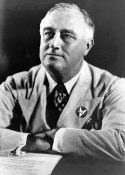
The Fireside Chats and the Public


Lawrence W. Levine and Cornelia R. Levine, The Fireside Conversations: America Responds to FDR during the Great Depression (Berkeley: University of California Press, 2010).

from the publisher:

“My friends, I want to talk for a few minutes with the people of the United States about banking.” So began the first of Franklin D. Roosevelt’s famous Fireside Chats, which came on the heels of his decision, two days after his inauguration, to close all American banks. During this address, Roosevelt used the intimacy of radio to share his hopes and plans directly with the people. He concluded by encouraging Americans to “tell me your troubles.” Roosevelt’s invitation was unprecedented, and the enormous public response it elicited signaled the advent of a new relationship between Americans and their president. In this indispensable book, Lawrence W. Levine and Cornelia R. Levine illuminate the period from 1933 to 1938 by setting each of the Fireside Chats in context and reprinting a moving selection of the letters that poured into Washington from an extraordinary variety of ordinary Americans. In his foreword, Michael Kazin examines the achievements and limits of the New Deal and the reasons that FDR remains, for many Americans, the exemplar of a good president. He also highlights the similarities of the 1930s to our era, with its deep recession and a new progressive administration in the White House.

Sunday, March 22, 2009

About Those Letters


I was happy to come across in the Medieval Review Gillian Knight's very positive review of Carol Poster and Linda C. Mitchell, eds., Letter-Writing Manuals and Instruction from Antiquity to the Present: Historical and Bibliographical Studies (Columbia: University of South Carolina Press, 2007).

In the academic world these things take time. (Disclaimer: I'm the editor of the series in which this book was published).