Friday, May 6, 2011

Roots of new media


Sheila C. Murphy, How Television Invented New Media (Rutgers University Press, 2011).

from the publisher:

Television is a global industry, a medium of representation, an architectural component of space, and a nearly universal frame of reference for viewers. Yet it is also an abstraction and an often misunderstood science whose critical influence on the development, history, and diffusion of new media has been both minimized and overlooked. How Television Invented New Media adjusts the picture of television culturally while providing a corrective history of new media studies itself.

Personal computers, video game systems, even iPods and the Internet built upon and borrowed from television to become viable forms. The earliest personal computers, disguised as video games using TV sets as monitors, provided a case study for television's key role in the emergence of digital interactive devices. Sheila C. Murphy analyzes how specific technologies emerge and how representations, from South Park to Dr. Horrible's Sing-Along-Blog, mine the history of television just as they converge with new methods of the making and circulation of images. Past and failed attempts to link television to computers and the Web also indicate how services like Hulu or Netflix On-Demand can give rise to a new era for entertainment and program viewing online. In these concrete ways, television's role in new and emerging media is solidified and finally recognized.

Wednesday, May 4, 2011

In the Land of Cotton


Karen L. Cox, Dreaming of Dixie: How the South Was Created in American Popular Culture (Chapel Hill: University of North Carolina Press, 2011).

from the publisher:

From the late nineteenth century through World War II, popular culture portrayed the American South as a region ensconced in its antebellum past, draped in moonlight and magnolias, and represented by such southern icons as the mammy, the belle, the chivalrous planter, white-columned mansions, and even bolls of cotton.

In Dreaming of Dixie, Karen Cox shows that the chief purveyors of this constructed nostalgia for the Old South were outsiders of the region, especially advertising agencies, musicians, publishers, radio personalities, writers, and filmmakers playing to consumers' anxiety about modernity by marketing the South as a region still dedicated to America's pastoral traditions. Cox examines how southerners themselves embraced the imaginary romance of the region's past, particularly in the tourist trade as southern states and cities sought to capitalize on popular perceptions by showcasing their Old South heritage. Only when television emerged as the most influential medium of popular culture did views of the South begin to change, as news coverage of the civil rights movement brought images of violence, protest, and conflict in the South into people's living rooms. Until then, Cox argues, most Americans remained content with their romantic vision of Dixie.

Monday, April 18, 2011

Republicans and the Social Compact

Is the Republican Party trying to repeal the New Deal? An editorial in today's New York Times:

Six months after voters sent Republicans in large numbers to Congress and many statehouses, it is possible to see the full landscape of destruction that their policies would cause — much of which has already begun. If it was not clear before, it is obvious now that the party is fully engaged in a project to dismantle the foundations of the New Deal and the Great Society, and to liberate business and the rich from the inconveniences of oversight and taxes.

"The New Republican Landscape," New York Times, 18 April 2011.

Sunday, April 17, 2011

Fracking PA

Governor Tom Corbett wants Pennsylvania to be the Texas of the next oil and gas boom, based on the exploitation of the natural gas in the Marcellus Shale formation under Pennsylvania. He has said he will veto any attempt to tax the industry, which is alleged to be responsible for toxifying underground water reserves, and for breaking up roads all over Pennsylvania. He is also attempting to evade environmental regulations that might identify and prevent damage to the environment.

Now a new Congressional study on the environmental dangers of fracking -- the hydraulic fracturing system used to extract gas from underground shale.

WASHINGTON — Oil and gas companies injected hundreds of millions of gallons of hazardous or carcinogenic chemicals into wells in more than 13 states from 2005 to 2009, according to an investigation by Congressional Democrats.

Ian Urbina, "Chemicals Were Injected into Wells, Report Says," New York Times, 17 April 2011.

Saturday, April 9, 2011

LionSearch

Penn State Logo

New search function unlocks Libraries' resources

The University Libraries will test a powerful new search function on March 21 that will allow users to find all library resources -- books, articles, newspapers, databases and more -- from a single search box. Called LionSearch, the new service is designed to mimic open Web search methods. Entering a search term in LionSearch will return, nearly instantaneously, a list of relevant physical and digital materials from the Libraries’ collections. LionSearch can be accessed from the Libraries’ homepage, www.libraries.psu.edu, and will debut initially in beta mode. Students, faculty and other users are encouraged to test the functionality of the service and leave feedback.

Penn State is one of a handful of universities around the world pioneering this service for their library collections. This simple and fast way of retrieving information will enhance the research process for students and unlock the wealth of resources available at Penn State.


"New search function unlocks Libraries' resources"

Friday, April 8, 2011

Net Neutrality -- Once There Was an Internet

The House of Representatives has voted to end Net Neutrality --

WASHINGTON — The House of Representatives approved a measure on Friday that would prohibit the Federal Communications Commission from regulating how Internet service providers manage their broadband networks, potentially overturning a central initiative of the F.C.C. chairman, Julius Genachowski. . . .

Edward Wyatt, "House Votes against 'Net Neutrality,'" New York Times, 8 April 2011.

Wednesday, April 6, 2011

Of the 1%, by the 1%, for the 1% Society: vanityfair.com

Joseph Stiglitz, "Of the 1%, by the 1%, for the 1%," Vanity Fair, May 2011

. . . a modern economy requires “collective action”—it needs government to invest in infrastructure, education, and technology. The United States and the world have benefited greatly from government-sponsored research that led to the Internet, to advances in public health, and so on. But America has long suffered from an under-investment in infrastructure (look at the condition of our highways and bridges, our railroads and airports), in basic research, and in education at all levels. Further cutbacks in these areas lie ahead. . . . <more>

Of the 1&#37;, by the 1&#37;, for the 1&#37; Society: vanityfair.com

Sunday, April 3, 2011

Academic Research and State Propaganda in Britain

D. D. Guttenplan reports in the New York Times on how British research funding for humanist scholars is being used to force them into doing the political work of the current government.
"Two historians have accused the British government of pressuring researchers to study Prime Minister David Cameron's 'Big Society' or lose their funding."
D. D. Guttenplan, "Academic Freedom, With Strings Attached?" New York Times, 3 April 2011.

Saturday, April 2, 2011

The Memory Purge in Maine


Peter Catapano on the memory purge in Maine:

Last weekend, on the order of Maine’s governor, Paul LePage, a 36-foot-wide, 11-panel mural, pictured in part below, was removed from the lobby of the state’s Department of Labor building in Augusta. The mural, which depicts scenes from Maine’s labor history, was completed with a $60,000 federal arts grant. (The artist, Judy Taylor, has expressed her dismay at the removal, but should probably send a thank-you note to the governor for the exposure.) LePage, who has been in office for about two months, claimed he removed the mural because of complaints from “some business owners” that it was too pro-union. (A spokesperson for the governor said it was “not in keeping with the department’s pro-business goals.”) . . . [more]

Peter Catapano, "The Mural Vanishes," New York Times, 1 April 2011.

image from Reuters, via New York Times

see also
"Buddhas of Bamiyan," Wikipedia

Wednesday, March 30, 2011

The Cost of Freedom (of Information): In Defense of William Cronon - Inside Higher Ed

Barbara Fister at Inside Higher Ed on the Wisconsin Republican e-mail search:

I am a huge fan of open government and of the Freedom of Information Act. The right of the people to request information from public officials is an important tool for journalism, research, and activism. That’s why, as I read responses to a political group’s request for e-mail correspondence from a state employee, my knee does not begin to jerk convulsively. I don’t think, “e-mail!? That’s outrageous! how dare you invade an individual’s privacy?” Not only do I know better than to think a work account is in any respect private or personal, but I remember how outraged I felt when I learned that top officials of the Bush White House used unofficial e-mail accounts to avoid their official correspondence being part of the record. (And I must say I am impressed that there’s a Wikipedia article on this very topic.)

All that said, I am appalled that officials of the Republican Party in Wisconsin have decided to use a public records law to peer into a University of Wisconsin history professor’s e-mail to see if he’s said anything they consider inappropriate and to find out if he can be attacked for violating the university’s policies. (An aside: as a born-and-bred Sconnie who spent my childhood hanging around the UW campus and playing tag in the basement hallways of the capital building, I am baffled and dismayed by recent events and wonder how it can possibly have happened in my home state; as a connoisseur of headlines, “Wisconsin Gets Weirder” is a keeper.) . . .

The Cost of Freedom (of Information): In Defense of William Cronon - Inside Higher Ed

Tuesday, March 29, 2011

The Intimidation Spreads

E-mail trolling linked to freedom of information requests is apparently becoming a method of intimidation for some Republicans.

A free enterprise think tank in Michigan -- backed by some of the biggest names in national conservative donor circles -- has made a broad public records request to at least three in-state universities with departments that specialize in the study of labor relations, seeking all their emails regarding the union battle in Wisconsin, Gov. Scott Walker (R-WI) and MSNBC's Rachel Maddow, TPM has learned. . . . [more]


Evan McMorris-Santoro, "Conservative Think Tank Seeks Michigan Seeks Michigan Profs' Emails about Wisconsin Union Battle . . . and Maddow," Talking Points Memo, 29 March 2011.

Monday, March 28, 2011

Academic Freedom in Wisconsin

Editorial in the New York Times, today:
The latest technique used by conservatives to silence liberal academics is to demand copies of e-mails and other documents. Attorney General Kenneth Cuccinelli of Virginia tried it last year with a climate-change scientist, and now the Wisconsin Republican Party is doing it to a distinguished historian who dared to criticize the state’s new union-busting law. These demands not only abuse academic freedom, but make the instigators look like petty and medieval inquisitors. . . .

"A Shabby Crusade in Wisconsin," editorial, New York Times, 28 March 2011.

Is This the New McCarthyism?

Paul Krugman in the New York Times:
The hard right — which these days is more or less synonymous with the Republican Party — has a modus operandi when it comes to scholars expressing views it dislikes: never mind the substance, go for the smear. And that demand for copies of e-mails is obviously motivated by no more than a hope that it will provide something, anything, that can be used to subject Mr. Cronon to the usual treatment. . . .

Paul Krugman, "William Cronon and the American Thought Police," New York Times, 28 March 2011.

Wisconsin's Republican Progressives

Professor William Cronon in the New York Times:

NOW that a Wisconsin judge has temporarily blocked a state law that would strip public employee unions of most collective bargaining rights, it’s worth stepping back to place these events in larger historical context.

Republicans in Wisconsin are seeking to reverse civic traditions that for more than a century have been among the most celebrated achievements not just of their state, but of their own party as well. . . .

William Cronon, "Wisconsin's Radical Break," New York Times, 22 March 2011.


It did not take long for Wisconsin Republicans to launch a McCarthyite attack on Professor Cronon.

Saturday, March 26, 2011

Bob Herbert, "Losing Our Way"

Bob Herbert's last New York Times column:

Limitless greed, unrestrained corporate power and a ferocious addiction to foreign oil have led us to an era of perpetual war and economic decline. Young people today are staring at a future in which they will be less well off than their elders, a reversal of fortune that should send a shudder through everyone. . . .


Bob Herbert, "Losing Our Way," New York Times, 26 March 2011.

Friday, March 25, 2011

Where the Action Is - Inside Higher Ed

Russ Olwell, "Where the Action Is," Inside Higher Ed, 25 March 2011.

When asked what they want to do when they grow up, few little kids answer, "I want to teach at a regional public university." They want to be astronauts, fighter pilots, spies or generals (OK, those were my choices at that age). In Ph.D. programs, graduate students are encouraged to seek work and accept positions at the kind of research institutions where they do their doctoral work, whether they are wealthy private institutions or top flagship public institutions. The only step off the research track imaginable is the private liberal arts college, where selective admissions and small classes promise an ideal teaching setting.


Where the Action Is - Inside Higher Ed

Thursday, March 24, 2011

Brit Celeb Deplores U.S. Political Polarization

Hendrik Hertzberg in the New Yorker:

Harken, please, to Charles Dickens, in “American Notes for General Circulation,” his account of his one and only visit to the United States. It’s 1842. Dickens, just thirty and already world-famous, is on a train out of Boston, his first American railway trip.


Brit Celeb Deplores U.S. Political Polarization

Superficial & Sublime? by Garry Wills | The New York Review of Books

A great bad review; a wonderful and hilarious gem by Wills, but it also evokes terror in the heart of any author.
This book, which was featured on the front page of The New York Times Book Review, comes recommended by some famous Big Thinkers. It is written by well-regarded professors (one of them the chairman of the Harvard philosophy department). This made me rub my eyes with astonishment as I read the book itself, so inept and shallow is it. . . .

Superficial & Sublime? by Garry Wills | The New York Review of Books

Embattled Public Radio by Bill McKibben | NYRBlog | The New York Review of Books

National Public Radio has taken a beating over the last two weeks: first its chief executive was forced to resign amid a scandal caused by a right-wing frame-up, and then, on Thursday, the GOP-dominated House voted to cut off all federal funding to NPR. For the moment, that bill seems unlikely to get far in the Senate, but it suggests just how much public radio has been undermined in recent weeks and months. What’s almost as disturbing as the persistent right-wing attacks on an institution respected and relied upon by the broad public is NPR’s seeming unwillingness to stand up for itself. . . .


Embattled Public Radio by Bill McKibben | NYRBlog | The New York Review of Books

Robert Darnton on a National Digital Library

Robert Darnton on the Google decision, in the Times:

ON Tuesday, Denny Chin, a federal judge in Manhattan, rejected the settlement between Google, which aims to digitize every book ever published, and a group of authors and publishers who had sued the company for copyright infringement. This decision is a victory for the public good, preventing one company from monopolizing access to our common cultural heritage.

Nonetheless, we should not abandon Google’s dream of making all the books in the world available to everyone. Instead, we should build a digital public library, which would provide these digital copies free of charge to readers. Yes, many problems — legal, financial, technological, political — stand in the way. All can be solved. . . . [read more]

Robert Darnton, "A Digital Library Better Than Google's," New York Times, 24 March 2011.

Tuesday, March 22, 2011

A Fish Named Badger

Stanley Fish in the Times:
In over 35 years of friendship and conversation, Walter Michaels and I have disagreed on only two things, and one of them was faculty and graduate student unionization. He has always been for and I had always been against. I say “had” because I recently flipped and what flipped me, pure and simple, was Wisconsin. . . . We are all badgers now. . . .

Stanley Fish, "We're All Badgers Now," New York Times, 22 March 2011.

Monday, March 21, 2011

Hush Harbor Rhetoric


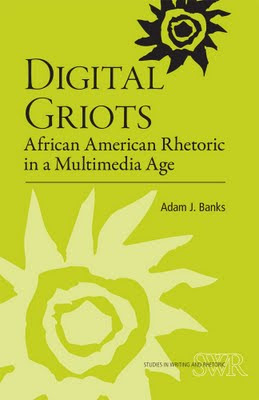
Vorriss L. Nunley, Keepin' It Hushed: The Barbershop and African American Hush Harbor Rhetoric (Detroit: Wayne State University Press, 2011).

from the publisher:

In Keepin’ It Hushed: The Barbershop and African American Hush Harbor Rhetoric, Vorris L. Nunley investigates the role of the hush harbor (a safe place for free expression among African American speakers) as a productive space of rhetorical tradition and knowledge generation. Nunley identifies the barbershop as an important hush harbor for black males in particular and traces the powerful cultural trope and its hidden tradition of African American knowledge through multiple texts. From Dunbar’s “We Wear the Mask” to the recent Barbershop movies and the provocative rhetoric of Reverend Jeremiah Wright, Nunley’s study touches on a range of time periods and genres.

Nunley’s introduction connects African American Hush Harbor Rhetoric (AAHHR) to everyday considerations of what may or may not be spoken in public and how African American speakers manage numerous hidden transcripts. In the first three chapters, Nunley charts different iterations of hush harbors and their function in the context of residual and emergent rhetorical traditions. He investigates public sphere theory and its application (and misapplication) to black civil society and hush harbors and connects AAHHR to nommo, the power of the word. In chapters 4 and 5, Nunley examines the ubiquity of the hush harbor trope in African American culture and considers barbershops as pedagogical sites, using literature, poetry, philosophy, and film to make his case. In chapter 6, he analyzes the Barbershop movie in detail, arguing that the movie’s commodified, neoliberal version of AAHHR did not represent a hush harbor, although that was ostensibly the aim.

Keepin’ It Hushed concludes with a presentation of a hush harbor pedagogy in chapter 7 and a distinctive analysis of hush harbor oriented speeches by then-Senator Obama and Rev. Jeremiah Wright. Rhetoricians and readers interested in African American life and culture will appreciate the cogent analysis in Nunley’s volume.

Thursday, March 17, 2011

NPR Funding - Up for a Vote Today

Here's an e-mail just received from my local NPR station --

Dear Friends of WPSU,

The House of Representatives will be voting mid-afternoon today on a bill, H.R. 1076, that would prohibit local stations, like WPSU, from using federal funds to purchase radio programming. The ostensible target of this proposed legislation is NPR which produces public radio's most popular daily news programming. However, this bill would also prohibit stations from using federal funds to purchase other highly valued public radio fare like Car Talk, Living on Earth, and Prairie Home Companion. It does not allow the use of federal funds to buy any programs at all.

The bill is a direct threat to the viability of smaller public stations, especially in rural areas, who might not have sufficient non federal discretionary dollars to acquire these programs. It is also a misguided attempt to stifle an important and highly valued public service.

NPR has made some very public misteps in the past year. For that they rightly deserve criticism. However, they have also been the target of unethical attacks by individuals with the very narrow and specific agenda of destroying NPR.

That will not happen. NPR will survive, with or without federal funding. However, local public radio stations are directly threatened by this action. This bill undermines their autonomy as locally controlled public service entities, and their ability to generate needed support for their operations.

Below is contact information for the federal representatives elected from the WPSU broadcast area. I am asking you to please contact your legislator today, and share your concerns on this matter. Our representatives need to hear that constituents will support them in opposing House Bill H.R. 1076.


Rep. Kelley - (202) 225-5406
http://wpsu.us1.list-manage1.com/track/click?u=7f20e5976689cba8ab948781c&id=e85c118e1a&e=a14db4a4e5

Rep. Thompson - (202) 225-5121
http://wpsu.us1.list-manage1.com/track/click?u=7f20e5976689cba8ab948781c&id=0ffd30d6d3&e=a14db4a4e5

Rep. Shuster - (202) 225-2431
http://wpsu.us1.list-manage.com/track/click?u=7f20e5976689cba8ab948781c&id=b4fb160bd0&e=a14db4a4e5

Thank you for your support of public broadcasting.
Ted Krichels, General Manager, Penn State Public Broadcasting

Appropriations committee hearing focuses on proposed cuts

From Penn State Newswire:

In the face of a proposed state budget that would see funding for Pennsylvania's public universities cut by more than 50 percent, Penn State President Graham Spanier, along with the leaders of Temple University, Lincoln University and the University of Pittsburgh, appeared before the state Senate Appropriations Committee March 16 to make the case for continued state support for the commonwealth's state-related institutions.

Sen. Jake Corman, chairman of the state Senate Appropriations Committee, asked the university leaders about the effects such a broad cut would have on their institutions. Overall, Pennsylvania Gov. Tom Corbett's budget proposes more than $660 million in cuts to institutions of higher education. The cuts proposed for Penn State alone represent a decrease of $182 million, or 52.4 percent, in state funding.

The proposed appropriation cut would represent a decrease of about 17 percent of Penn State's overall instructional budget; the money is largely used to help offset to cost of tuition for Pennsylvania residents. Spanier reminded the committee that state-related universities have not contributed to the current budget deficit, since state appropriations have remained stagnant for the past decade even as other areas of Commonwealth of Pennsylvania spending continued to rise.

"We're all very mindful of the state's current budget situation, and we do expect to be part of the solution," Spanier said. "I'm not sure it's fair to say, however, that we are part of the problem in this respect: our appropriations in actual dollars have been flat over the last decade. We have not contributed to the state's deficit because our appropriation has not increased since 2000."

The presidents all said that they would not turn to tuition increases to primarily deal with appropriation cuts, yet the reductions would result in some level of higher tuition for in-state students, potentially pushing the cost of education at Pennsylvania's state-related universities out of reach for some students and families already stressed by student-loan debt. At Penn State, Spanier said the proposed cut would result in program cuts, layoffs, salary freezes and other measures.

"It is not true that any of us would unduly raise tuition, even under the most dire circumstances, as the principal way of remedying a shortfall in our appropriation," Spanier said. "Of course tuition would need to increase, but we could not put that great a burden on the backs of our current and prospective students."

Mark Nordenberg, chancellor of the University of Pittsburgh, called the scope of the proposed cuts "stunning."

"The proposed cuts are deep, they are disproportionate, and they are damaging to some of the most productive institutions in the commonwealth of Pennsylvania," he said. "I do think that this proposal ought to be a concern for everybody who cares about the next generation of Pennsylvanians and for everybody who cares about the shape of Pennsylvania's economy as we move into an increasingly competitive century."

Spanier said Penn State agricultural research and Cooperative Extension would be particularly hard-hit by a $29 million cut to their appropriation. In agriculture alone, he said, the workforce would be cut by about 440 positions, or 50 percent. That would surely mean a severe cutback in the breadth of services currently provided by Cooperative Extension to the state's agriculture industry.

"These are not made-up numbers, these are not numbers designed to shock people; these are actual projections. We've had to get very specific in the last few days because if this budget goes forward as it is now on July 1, we have to operate with a balanced budget just as the commonwealth does, and the numbers are very dramatic. Agriculture is just in one of the colleges of our University. There are ripple effects that would go out across the entire institution with appropriation reductions of the sort that we are looking at."

"We are prepared to do our fair share. We have never said differently. But I don't believe that a decrease in our appropriation at this level would constitute anyone's idea of what is a fair share for some of the state's greatest resources -- our public institutions of higher education."

Sen. John Rafferty Jr. asked about the impact on the state's economy if the proposed cuts were to stand. Penn State alone generates about $17 billion in direct and indirect economic activity in Pennsylvania every year. Spanier said the cuts would affect the University's ability to continue that output. Penn State brings in about $800 million in research funding annually, much of which comes from outside of the state, through grants.

"Each $1 million of research funding creates about 30 jobs within Pennsylvania," he said. "From an economic development standpoint, we make significant contributions."

In addition to jobs created by the influx of research funding, the majority of Penn State's graduates, and the graduates of the other state-related institutions, work in Pennsylvania when they graduate, and many who leave eventually return, contributing further to the state's economic well being.

"On the programmatic side, we are the principal producers of college graduates -- 18,000 graduates a year from Penn State, the majority of them taking jobs in Pennsylvania. Our contribution to the tax base, our contribution to economic development, our research activity with 750 different companies throughout the commonwealth -- these are all things that could be affected and could really erode the investment that the state has made in Penn State and in all of our public institutions historically."

Between the four state-related institutions about 150,000 students are educated each year.

Sen. Lisa Boscola said that while she supports many of the cuts proposed by the governor's budget, the reductions proposed for higher education are unfair and disproportionate. Boscola asked the panel about the percentage of students who stay in Pennsylvania after graduating from a state-related institution. Boscola said it is her hope that the final budget will find ways to keep more graduates in Pennsylvania.

Spanier said more students would stay if employment opportunities were available. He also said many return later in life. "Many of the students who at age 22 leave Pennsylvania to work elsewhere do ultimately come back after they've gotten some experience. That number is almost completely dependent on what job opportunities are out there for them. To the extent that the Universities can contribute to the economic strength of the commonwealth of Pennsylvania, we will keep even more of those graduates," he said.

Corman said the March 16 hearing represents a beginning to the Senate Appropriation Committee's budget discussions. He said he expects to stay in contact with the leaders of the commonwealth's state-related universities as the June 30 budget deadline approaches.

"It isn't new for higher education to take the brunt of budgetary problems. I don't know another line item in the budget that has (remained stagnant) over the last 8 years," Corman said. "This proposal has sort of shocked the commonwealth in a lot of ways ... I think by finally elevating higher education to this level, now the public is going to get engaged and hopefully put higher education at a higher level of priority for our budget."

The legislature will continue its hearings with other recipients of state funding and will work in the coming months to finalize the state budget.

Tuesday, March 8, 2011

Pro-Terrorist Republican Congressman? Holding Hearings on Terrorism?

From the New York Times:

For Representative Peter T. King, as he seizes the national spotlight this week with a hearing on the radicalization of American Muslims, it is the most awkward of résumé entries. Long before he became an outspoken voice in Congress about the threat from terrorism, he was a fervent supporter of a terrorist group, the Irish Republican Army.

Scott Shane, "For Lawmaker Examining Terror, a Pro-I.R.A. Past," New York Times, 8 March 2011.

Devastating appropriation cut advanced for Penn State

from Penn State Live (8 March 2011):

Penn State and other Pennsylvania public universities are slated for the most dramatic appropriation cut in the history of American higher education, based on the Commonwealth of Pennsylvania's budget proposal released today (March 8) by Gov. Tom Corbett.

The budget cuts Penn State's appropriation by 52.4 percent, a devastating reduction of $182 million. This includes a 50 percent cut in Penn State's educational appropriation, a 50 percent cut in its Agricultural Research and Cooperative Extension appropriations, the loss of all federal stimulus dollars, a reduction for the Pennsylvania College of Technology, and the total elimination of medical assistance funding for the Penn State Hershey Medical Center.

The proposed appropriation represents the most severe funding cut in Penn State’s 157-year history and suggests a redefinition of Penn State’s role as Pennsylvania’s land-grant institution.

"A funding gap this large is going to fundamentally change the way we operate, from the number of students we can educate, to the tuition we must charge, to the programs we offer and the services we can provide, to the number of employees and the research we undertake," said President Graham Spanier.

According to university officials, a cut of this magnitude jeopardizes the University’s mission of providing access and opportunity to students at 24 campuses. It would undermine support of the Commonwealth’s agricultural industry and force a complete redefinition of the state's Cooperative Extension Service and the agricultural research upon which it depends. It would affect the University's ability to sustain dozens of programs that support economic development in the Commonwealth.

The University currently receives less than 8 percent of its annual operating budget from the state, a figure that has eroded significantly over the last two decades. Under the governor’s proposal, that figure will fall to 4 percent.

This budget proposal comes on the heels of a decade of stagnant state appropriations that in some years also were reduced again through mid-year rescissions.

Cuts in higher education budgets are being proposed in many states, but never has a single institution's budget been slated for a reduction of more than 50 percent in a given year. The University would have a matter of only a few weeks to manage such a catastrophic cut.

"A reduction of this magnitude would necessitate massive budget cuts, layoffs and tuition increases, with a devastating effect on many students, employees and their families," said Al Horvath, senior vice president for Finance and Business. "While we have for many months been planning for a potential state funding cut, we could not have envisioned one so damaging to the future of the University and the Commonwealth."

University officials report that no one in state government reached out to them with any advance notice of such a possibility, nor was there any prior discussion about the potential impact of such a cut.

Penn State has mobilized a team of University leaders to look at operational cuts. "We must consider the welfare of our students and the quality of their education, not to mention our long-term funding stability," said Steve Garban, chairman of Penn State's Board of Trustees. "As we work to handle a potential funding cut, we’ll be guided by our goals of quality and access, and we’ll seek to avoid having our students and their families shoulder this entire burden through increased tuition -- although tuition will rise."

"We are eager to explore with elected officials whether they support this proposal and whether they see this as the first step toward the complete elimination of public higher education in Pennsylvania," said John Surma, CEO of US Steel, who serves as vice chair of Penn State's Board of Trustees and chair of its Budget Subcommittee.

Administrators plan to deal with the cuts as equitably as possible, but significant downsizing in academic and administrative units will be under consideration. Scaling back plans for critical facility needs, such as major maintenance and capital improvements, will be undertaken; changes to the University’s health care programs will be revisited to create additional savings; salary increases for employees will likely again be frozen; and more across-the-board budget reductions for academic and administrative units will have to be instituted.

"We are committed to finding every possible way to reduce expenses and maintain quality,” added Spanier. "We face difficult choices and this will be an extremely challenging year -- one that quite possibly will change the face of higher education in the Commonwealth."

The governor’s budget proposal is the first step in the appropriation process. Penn State will continue to press its case for support with the General Assembly and the governor over the next several weeks.

"I want to thank Penn Staters for their continued support and for all of their efforts that allow Penn State to be the most student-centered research university in the nation," added Spanier. "I deeply appreciate the commitment we feel from our 96,000 students, our 47,000 faculty and staff, and our 514,000 alumni. I vow to challenge the level of this reduction aggressively and welcome the support that is already pouring in."

Monday, March 7, 2011

Blaming the Teacher

Why Blame the Teachers?

Diane Ravitch, "It Started with 'No Child Left Behind," New York Times, 7 March 2011.

"A historic strain of anti-intellectualism in American thought has merged with fiscal conservatism, producing the present campaign to dismantle the teaching profession. It echoes a deeply-ingrained American belief that anyone can teach, no training or experience necessary.

Although politicians and corporate leaders claim they want to reform education, it is impossible to see how the campaign against teachers will advance that goal. No high-performing nation in the world is reducing the status and rights of the teaching profession. . . ." [read more]


Is College the Answer?

Paul Krugman in the Times:

But there are things education can’t do. In particular, the notion that putting more kids through college can restore the middle-class society we used to have is wishful thinking. It’s no longer true that having a college degree guarantees that you’ll get a good job, and it’s becoming less true with each passing decade.

So if we want a society of broadly shared prosperity, education isn’t the answer — we’ll have to go about building that society directly. We need to restore the bargaining power that labor has lost over the last 30 years, so that ordinary workers as well as superstars have the power to bargain for good wages. We need to guarantee the essentials, above all health care, to every citizen. . . . [more]

Paul Krugman, "Dollars and Degrees," New York Times, 7 March 2011.

Martin Luther King's rhetoric


Wolfgang Mieder, "Making a Way Out of No Way": Martin Luther King's Sermonic Proverbial Rhetoric (New York: Peter Lang, 2010).

from the publisher:

"In barely forty years of life Martin Luther King (1929-1968) distinguished himself as one of the greatest social reformers of modern times: civil rights leader, defender of nonviolence in the struggle of desegregation, champion of the poor, anti-war proponent, and broad-minded visionary of an interrelated world of free people. His many verbal and written communications in the form of sermons, speeches, interviews, letters, essays, and several books are replete with Bible proverbs as «Love your enemies», «He who lives by the sword shall perish by the sword», and «Man does not live by bread alone» as well as folk proverbs as «Time and tide wait for no man», «Last hired, first fired», «No gain without pain», and «Making a way out of no way». He also delighted in citing quotations that have become proverbs, to wit «No man is an island», «All men are created equal», and «No lie can live forever». King recycles these bits of traditional wisdom in various contexts, varying his proverbial messages as he addresses the multifaceted issues of civil rights. His rhetorical prowess is thus informed to a considerable degree by his effective use of his repertoire of proverbs which he frequently uses as leitmotifs or amasses into set pieces of fixed phrases to be employed repeatedly."

Friday, March 4, 2011

Abraham Lincoln's First Inaugural Address

From today's New York Times, on the 150th anniversary of Abraham Lincoln's first inauguration, a consideration of his inaugural address.

"Lincoln Addresses the Nation," New York Times, 4 March 2011.

Sunday, February 27, 2011

Drinking Frackwater

The New York Times on the hazards of fracking:

With hydrofracking, a well can produce over a million gallons of wastewater that is often laced with highly corrosive salts, carcinogens like benzene and radioactive elements like radium, all of which can occur naturally thousands of feet underground. Other carcinogenic materials can be added to the wastewater by the chemicals used in the hydrofracking itself. . . . [more]

Ian Urbina, "Regulation Lax as Gas Wells' Tainted Water Hits Rivers," New York Times, 27 February 2011.

Friday, February 25, 2011

The Shock Doctrine in Madison, Wisconsin

Paul Krugman in the Times:

In recent weeks, Madison has been the scene of large demonstrations against the governor’s budget bill, which would deny collective-bargaining rights to public-sector workers. Gov. Scott Walker claims that he needs to pass his bill to deal with the state’s fiscal problems. But his attack on unions has nothing to do with the budget. In fact, those unions have already indicated their willingness to make substantial financial concessions — an offer the governor has rejected.

What’s happening in Wisconsin is, instead, a power grab — an attempt to exploit the fiscal crisis to destroy the last major counterweight to the political power of corporations and the wealthy. And the power grab goes beyond union-busting. The bill in question is 144 pages long, and there are some extraordinary things hidden deep inside. . . . [more]

Paul Krugman, "Shock Doctrine, U.S.A.," New York Times, 25 February 2011.

Monday, February 14, 2011

Confessional Politics


Bryan T. Kaylor, Presidential Campaign Rhetoric in an Age of Confessional Politics (Lexington Books, 2011).

from the publisher:

"When a Bible-quoting Sunday School teacher, Jimmy Carter, won the 1976 presidential election, it marked the start of a new era of presidential campaign discourse. The successful candidates since then have followed Carter's lead in publicly testifying about their personal religious beliefs and invoking God to justify their public policy positions and their political visions. With this new confessional political style, the candidates have repudiated the former perspective of a civil-religious contract that kept political leaders from being too religious and religious leaders from being too political. Presidential Campaign Rhetoric in the Age of Confessional Politics analyzes the religious-political discourse used by presidential nominees from 1976-2008, and then describes key characteristics of their confessional rhetoric that represent a substantial shift from the tenets of the civil-religious contract. This new confessional political style is characterized by religious-political rhetoric that is testimonial, partisan, sectarian, and liturgical in nature. In order to understand why candidates have radically adjusted their God talk on the campaign trail, important religious-political shifts in American society since the 1950s are examined, which demonstrate the rhetorical demands evangelical religious leaders have placed upon our would-be national leaders. Brian T. Kaylor utilizes Michel Foucault's work on the confession_with theoretical adjustments_to critique the significant problems of the confessional political era. With clear analyses and unsettling relevance, Kaylor's critique of contemporary political discourse will rouse the interest and concern of engaged citizens everywhere."

Tuesday, February 8, 2011

Politics of Knowledge

Two interesting articles in the New York Times today on the politics of intellectual inquiry:

Teaching creationism in public schools has consistently been ruled unconstitutional in federal courts, but according to a national survey of more than 900 public high school biology teachers, it continues to flourish in the nation’s classrooms.

"On Evolution, Biology Teachers Stray from Lesson Plan," New York Times, 8 February 2011.

A social psychologist has argued that there is a hostile climate for non-liberals among his colleagues.

John Tierney, "Social Scientist Sees Bias Within," New York Times, 8 February 2011.

Monday, February 7, 2011

Crisis and Ideology

Editorial from the New York Times:

As states groan and stumble through the recession, some politicians are trying to exploit their financial crises for ideological purposes. . . . [read more]


"Their Real Agenda," New York Times, 7 February 2011.

Thursday, February 3, 2011

President Barack Obama - speech at Penn State University, 3 February 2011


President Barack Obama, "Winning the Future with Clean Energy," speech at Pennsylvania State University, University Park, PA, 3 February 2011.

President Obama in State College, PA

President Obama is paying a visit today to Penn State University in State College, Pennsylvania. He was to have come yesterday, but when it became clear that yesterday's big winter storm was going to be a problem, the visit was re-scheduled for today.

President Obama will visit engineering and technology projects at the University, and apparently speak both about a major government grant to Penn State to develop energy innovation at the Philadelphia Navy Yard and about the larger issues of energy innovation, climate change, and jobs.

According to the White House announcement, the President will speak about the Better Building Initiative.

A presidential visit brings tremendous local interest and also, we are warned, a day of traffic delays and parking problems.

What will he say?

I found myself wondering if President Obama would review the history of energy technologies in Pennsylvania -- the stripping of the forests to make charcoal for iron smelters; the re-planting of the forests; the coal industry, which fueled industrial development, especially big steel; the discovery of oil and the development of the petroleum industry--which eventually moved to the West. The history of energy and Pennsylvania is a complex one -- and would of course include the story of Three Mile Island (I don't think we will hear about that today); and now the extraction of natural gas from the Marcellus Shale deposits -- bringing what some worry is another round of environmental destruction, breaking up local roads and polluting wells.

Well, he can't, and probably won't, touch on most of this. And of course, in the middle of all this, the President is dealing with Egypt, two wars, the economy.

I'm looking forward to an interesting speech. It's a big day for Penn State and State College, Pennsylvania.

Wednesday, February 2, 2011

An American Fatwa? Or just old fashioned McCarthyism?

Cary Nelson, president of the American Association of University Professors, has released the following statement about threats to an American professor stemming from TV commentator Glenn Beck. The statement appears on the AAUP web site.

One expects heated public rhetoric in times of war. But evidence is increasing that American politics is indeed itself war by other means. From Web sites to blogs to television talk shows people are castigated—and even threatened—for the views they hold. This trend undermines the character of our public life and leaves some citizens frightened to speak their minds. Because faculty members have long contributed to democratic debate by expressing their views in the public sphere, it is especially notable and worrisome when they become targets of what nearly amount to an American Fatwa—public suggestions that they merit violent retribution in punishment for their comments on issues of concern. The virulent attacks on Frances Fox Piven are a particularly disturbing example.

Dr. Piven is a Distinguished Professor of Political Science and Sociology at the Graduate Center, City University of New York. In recent weeks she has been subjected to an onslaught of denunciations, including death threats posted on theblaze.com, a website maintained by a company owned by radio and television commentator Glenn Beck.

In his television programs, Mr. Beck has referred to Professor Piven dozens of times, describing her as “an enemy of the Constitution” intent on bringing about the “collapse of our economic system.” Responding to an article that Professor Piven published in the January 10 issue of The Nation saying that unemployed people should be staging mass protests, Mr. Beck asked in his January 17 television show, “Is that not inciting violence? Is that not asking for violence?” Public demonstrations can of course be entirely peaceful. Even civil disobedience is typically nonviolent. Mr. Beck’s remarks are unjustified.

Mr. Beck has—even more outrageously—linked Professor Piven’s support for social movements to terrorism, and a December 31, 2010, headline in theblaze.com declared, “Frances Fox Piven Rings in the New Year by Advocating Violent Revolution.”

Amid these relentless tirades, Professor Piven has herself begun to receive threats of violence.

The American Association of University Professors, since our founding in 1915, has championed the vigorous exchange of ideas both within and outside the academic community. We do not dispute the right of individuals and commentators to strenuously question or protest the writings of academics. Nor can any professor claim immunity from criticism, however acid and from whatever quarter. But it is despicable to threaten physical harm to Professor Piven for expressing her views.

No news organization or commentator can justify or should tolerate threats to do physical harm to a professor or to any author. We join others in strongly urging those who are critical of Professor Piven’s writings to advance their positions in ways that foster responsible criticism and debate.

—Cary Nelson
AAUP President

Sunday, January 30, 2011

High school biology teachers reluctant to endorse evolution in class

From Penn State Live:

Thursday, January 27, 2011

University Park, Pa. -- The majority of public high school biology teachers are not strong classroom advocates of evolutionary biology, despite 40 years of court cases that have ruled teaching creationism or intelligent design violates the Constitution, according to Penn State political scientists. A mandatory undergraduate course in evolutionary biology for prospective teachers, and frequent refresher courses for current teachers, may be part of the solution, they say.

"Considerable research suggests that supporters of evolution, scientific methods, and reason itself are losing battles in America's classrooms," write Michael Berkman and Eric Plutzer, professors of political science at Penn State, in the Jan. 28 issue of Science. . . . more

Monday, January 17, 2011

Silence and Listening


Cheryl Glenn and Krista Ratcliffe, eds., Silence and Listening as Rhetorical Arts (Carbondale: Southern Illinois University Press, 2011).

from the press:

In Silence and Listening as Rhetorical Arts, editors Cheryl Glenn and Krista Ratcliffe bring together seventeen essays by new and established scholars that demonstrate the value and importance of silence and listening to the study and practice of rhetoric. Building on the editors’ groundbreaking research, which respects the power of the spoken word while challenging the marginalized status of silence and listening, this volume makes a strong case for placing these overlooked concepts, and their intersections, at the forefront of rhetorical arts within rhetoric and composition studies.


Divided into three parts—History, Theory and Criticism, and Praxes—this book reimagines traditional histories and theories of rhetoric and incorporates contemporary interests, such as race, gender, and cross-cultural concerns, into scholarly conversations about rhetorical history, theory, criticism, and praxes. For the editors and the other contributors to this volume, silence is not simply the absence of sound and listening is not a passive act. When used strategically and with purpose—together and separately—silence and listening are powerful rhetorical devices integral to effective communication. The essays cover a wide range of subjects, including women rhetors from ancient Greece and medieval and Renaissance Europe; African philosophy and African American rhetoric; contemporary antiwar protests in the United States; activist conflict resolution in Israel and Palestine; and feminist and second-language pedagogies.


Taken together, the essays in this volume advance the argument that silence and listening are as important to rhetoric and composition studies as the more traditionally emphasized arts of reading, writing, and speaking and are particularly effective for theorizing, historicizing, analyzing, and teaching. An extremely valuable resource for instructors and students in rhetoric, composition, and communication studies, Silence and Listening as Rhetorical Arts will also have applications beyond academia, helping individuals, cultural groups, and nations more productively discern and implement appropriate actions when all parties agree to engage in rhetorical situations that include not only respectful speaking, reading, and writing but also productive silence and rhetorical listening.

Martin Luther King Jr. Day

The White House

Office of the Press Secretary

Presidential Proclamation--Martin Luther King, Jr., Federal Holiday

MARTIN LUTHER KING, JR., FEDERAL HOLIDAY, 2011

-------

BY THE PRESIDENT OF THE UNITED STATES OF AMERICA

A PROCLAMATION

Half a century ago, America was moved by a young preacher who called a generation to action and forever changed the course of history. The Reverend Dr. Martin Luther King, Jr. devoted his life to the struggle for justice and equality, sowing seeds of hope for a day when all people might claim "the riches of freedom and the security of justice." On Martin Luther King, Jr., Federal Holiday, we commemorate the 25th anniversary of the holiday recognizing one of America's greatest visionary leaders, and we celebrate the life and legacy of Dr. King.

Dr. King guided us toward a mountaintop on which all Americans -- regardless of skin color -- could live together in mutual respect and brotherhood. His bold leadership and prophetic eloquence united people of all backgrounds in a noble quest for freedom and basic civil rights. Inspired by Dr. King's legacy, brave souls have marched fearlessly, organized relentlessly, and devoted their lives to the unending task of perfecting our Union. Their courage and dedication have carried us even closer to the promised land Dr. King envisioned, but we must recognize their achievements as milestones on the long path to true equal opportunity and equal rights.

We must face the challenges of today with the same strength, persistence, and determination exhibited by Dr. King, guided by the enduring values of hope and justice embodied by other civil rights leaders. As a country, we must expand access to opportunity and end structural inequalities for all people in employment and economic mobility. It is our collective responsibility as a great Nation to ensure a strong foundation that supports economic security for all and extends the founding promise of life, liberty, and the pursuit of happiness to every American.

Dr. King devoted his life to serving others, reminding us that "human progress is neither automatic nor inevitable. Every step toward the goal of justice requires sacrifice, suffering, and struggle -- the tireless exertions and passionate concern of dedicated individuals." Commemorating Dr. King's life is not only a tribute to his contributions to our Nation and the world, but also a reminder that every day, each of us can play a part in continuing this critical work.

For this reason, we honor Dr. King's legacy with a national day of service. I encourage all Americans to visit www.MLKDay.gov to learn more about service opportunities across our country. By dedicating this day to service, we move our Nation closer to Dr. King's vision of all Americans living and working together as one beloved community.

NOW, THEREFORE, I BARACK OBAMA, President of the United States of America, by virtue of the authority vested in me by the Constitution and the laws of the United States, do hereby proclaim January 17, 2011, as the Martin Luther King, Jr., Federal Holiday. I encourage all Americans to observe this day with appropriate civic, community, and service programs in honor of Dr. King's life and lasting legacy.

IN WITNESS WHEREOF, I have hereunto set my hand this fourteenth day of January, in the year of our Lord two thousand eleven, and of the Independence of the United States of America the two hundred and thirty-fifth.

BARACK OBAMA

Friday, January 14, 2011

David Brooks on Modesty and Civility

David Brooks, "Tree of Failure," New York Times, 14 January 2011.

So this is where civility comes from — from a sense of personal modesty and from the ensuing gratitude for the political process. Civility is the natural state for people who know how limited their own individual powers are and know, too, that they need the conversation. They are useless without the conversation. . . .
A column well worth reading on the necessity for modesty in a democracy.

JFK Library online


The John F. Kennedy Presidential Library has announced the release of thousands of on-line documents from the JFK archives. This could be a valuable resource for teachers, students, researchers, and citizens.

I have spent many hours in research at the Library and have often wished I could share access to the original documents with my students.

Check out the digital archive.


photo: from the JFK Library web site

Monday, January 10, 2011

A Shooting in Tucson

I spoke this morning with a reporter from a national network about the terrible shootings in Arizona this weekend. She asked whether I expect that the events in Tucson will make any difference to the behavior of members of Congress.

Who knows?

It seemed to me after we talked that perhaps rather than speculating about whether Congress will change, we should ask ourselves how we might want it to change, and how we would know if it did. What differences in the talk of Congress -- and of leaders in politics and the media more generally -- would contribute to changing the tone?

Robert's Rules of Order does offer guidance on decorum in debate on the floor, in section 43:
REFRAINING FROM ATTACKING A MEMBER'S MOTIVES. When a question is pending, a member can condemn the nature or likely consequences of the proposed measure in strong terms, but he must avoid personalities, and under no circumstances can he attack or question the motives of another member. The measure, not the member, is the subject of debate. If a member disagrees with a statement by another in regard to an event that both witnessed, he cannot state in debate that the other's statement "is false." But he may say, "I believe there is strong evidence that the member is mistaken." The moment the chair hears such words as "fraud," "liar," or "lie" used about a member in debate, he must act immediately and decisively to correct the matter and prevent its repetition.
This is a good rule, as far as it goes. It is the rule that Congressman Joe Wilson violated when he shouted "You lie!" at the President last year in a joint session of Congress. In the spirit of the rule, we could go considerably further than bare compliance while still leaving plenty of room for vigorous debate and disagreement.

We don't know whether there is any direct causal connection between vitriolic political language and what happened in Tucson.

A New York Times editorial today says in part the
It is facile and mistaken to attribute this particular madman’s act directly to Republicans or Tea Party members. But it is legitimate to hold Republicans and particularly their most virulent supporters in the media responsible for the gale of anger that has produced the vast majority of these threats, setting the nation on edge. Many on the right have exploited the arguments of division, reaping political power by demonizing immigrants, or welfare recipients, or bureaucrats. They seem to have persuaded many Americans that the government is not just misguided, but the enemy of the people. . . .

"Bloodshed and Invective in Arizona," New York Times, 10 January 2011.

See also Paul Krugman, "Climate of Hate"
Gail Collins, "A Right to Bear Glocks?"
Timothy Egan, "Tombstone Politics."
David Gergen, "No Time for Finger Pointing," CNN.

Friday, January 7, 2011

Tears as Communication

"When we cry, we may be doing more than expressing emotion. Our tears, according to striking new research, may be sending chemical signals that influence the behavior of other people. . . ."

Pam Belluck, "In Women's Tears, a Chemical Signal That Says, "Not Tonight, Dear," New York Times, 6 January 2011.

Sunday, January 2, 2011

Inequality

With the newly elected Republican Congress and continuing unemployment, we are going to see a rise in blaming unions -- especially public employee unions, including teachers -- for having jobs and pensions.

And yet see Nicholas Kristof's reminder in today's New York Times -- 1 percent of Americans own more wealth than the bottom 90 percent. And we have just passed a huge tax cut for the wealthiest Americans. Of course, even to say this is to move from one blame rhetoric to another. We're in for more lean times, and more mean times.

Nicholas Kristof, "Equality, a True Soul Food," New York Times, 2 January 2011.